

Storefront & Domain Management System for eCommerce
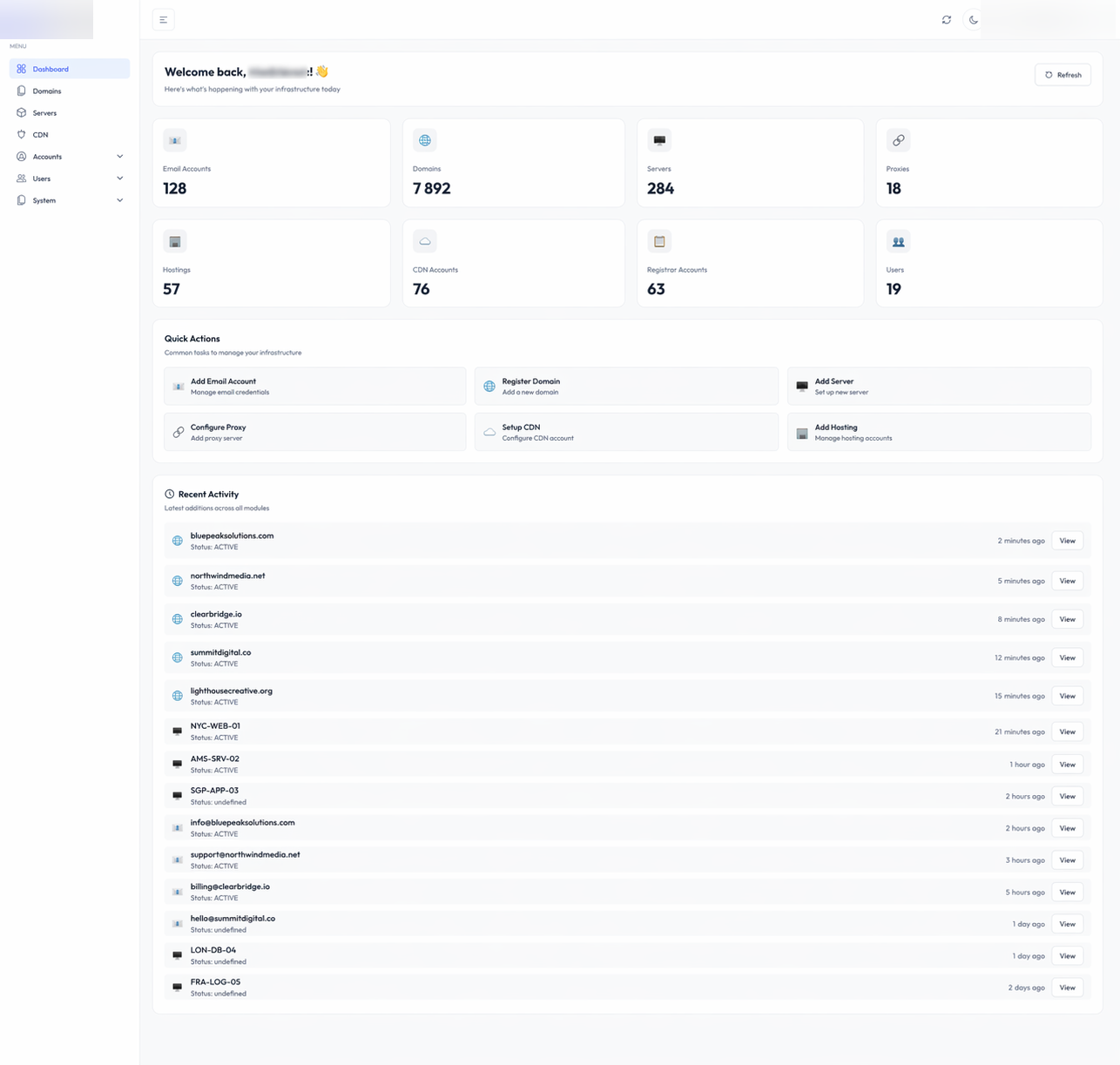
An internal management interface for a full portfolio of sites and their domains: registrar, DNS, hosting, and deployment in one placeLaunch or clone storefronts, point domains, and deploy changes from the UI, without opening a separate provider panel for each step
One management interface for a whole portfolio of online stores.

The situation
An operator running many storefronts and brands was juggling ten registrar tabs, five hosting cabinets, and three CDN panels. Every domain's chain (registrar to DNS to server) lived somewhere different, and any bulk change meant SSH sessions and copy-pasted configs.
How we built it
An internal management interface that brings the full domain chain into one place, on an explicit 'email to account to resource' model so no credential or resource is left unattached. Background synchronization keeps the dashboard aligned with the current state of the connected systems, and any registrar, CDN, or host connects behind a common adapter, so no provider is hard-wired.
What it does
Domains
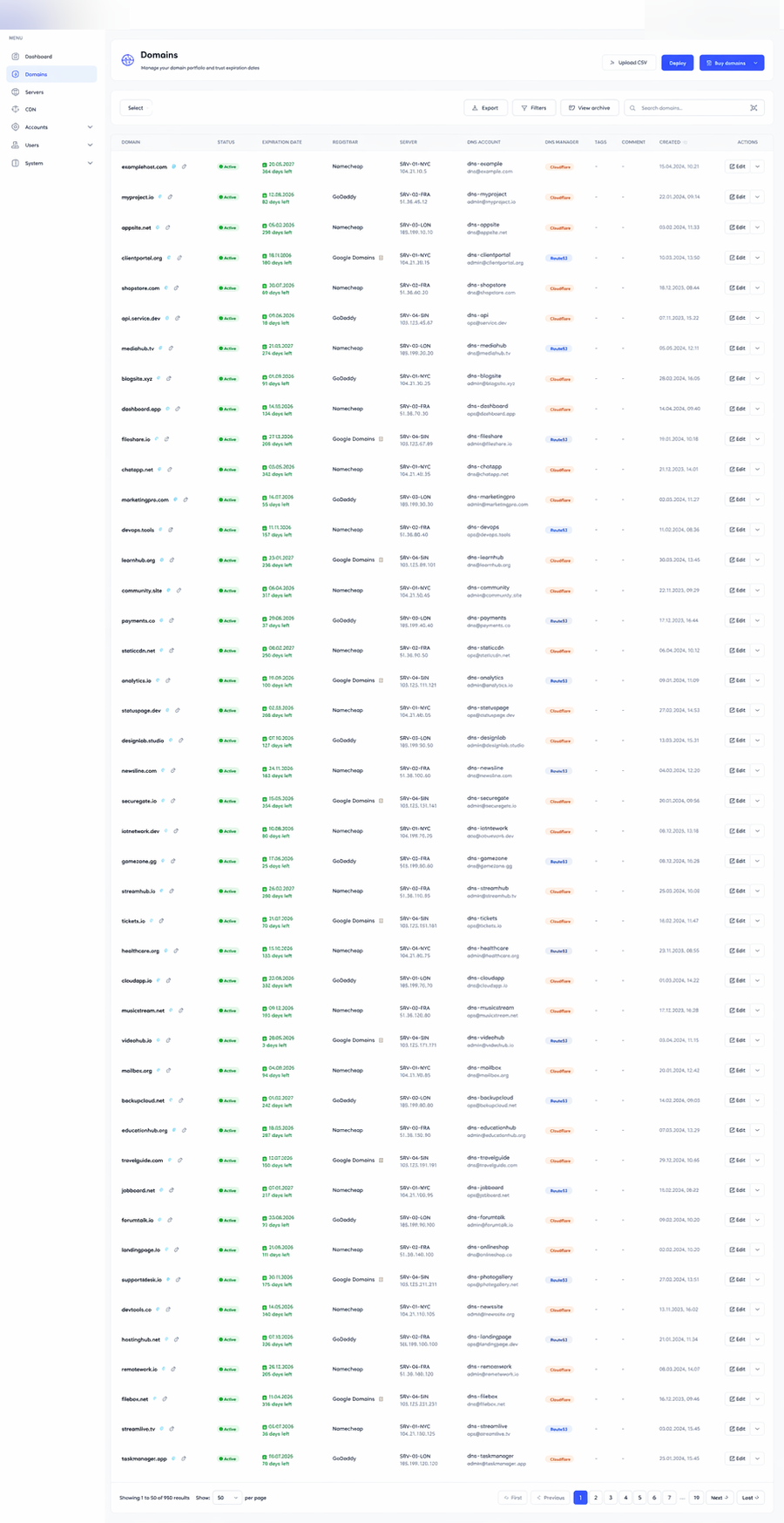
End-to-end ownership of every domain, registrar to DNS to server. Clone content, migrate to another server, switch DNS provider, or deploy a ZIP directly from the UI.
Registrar accounts
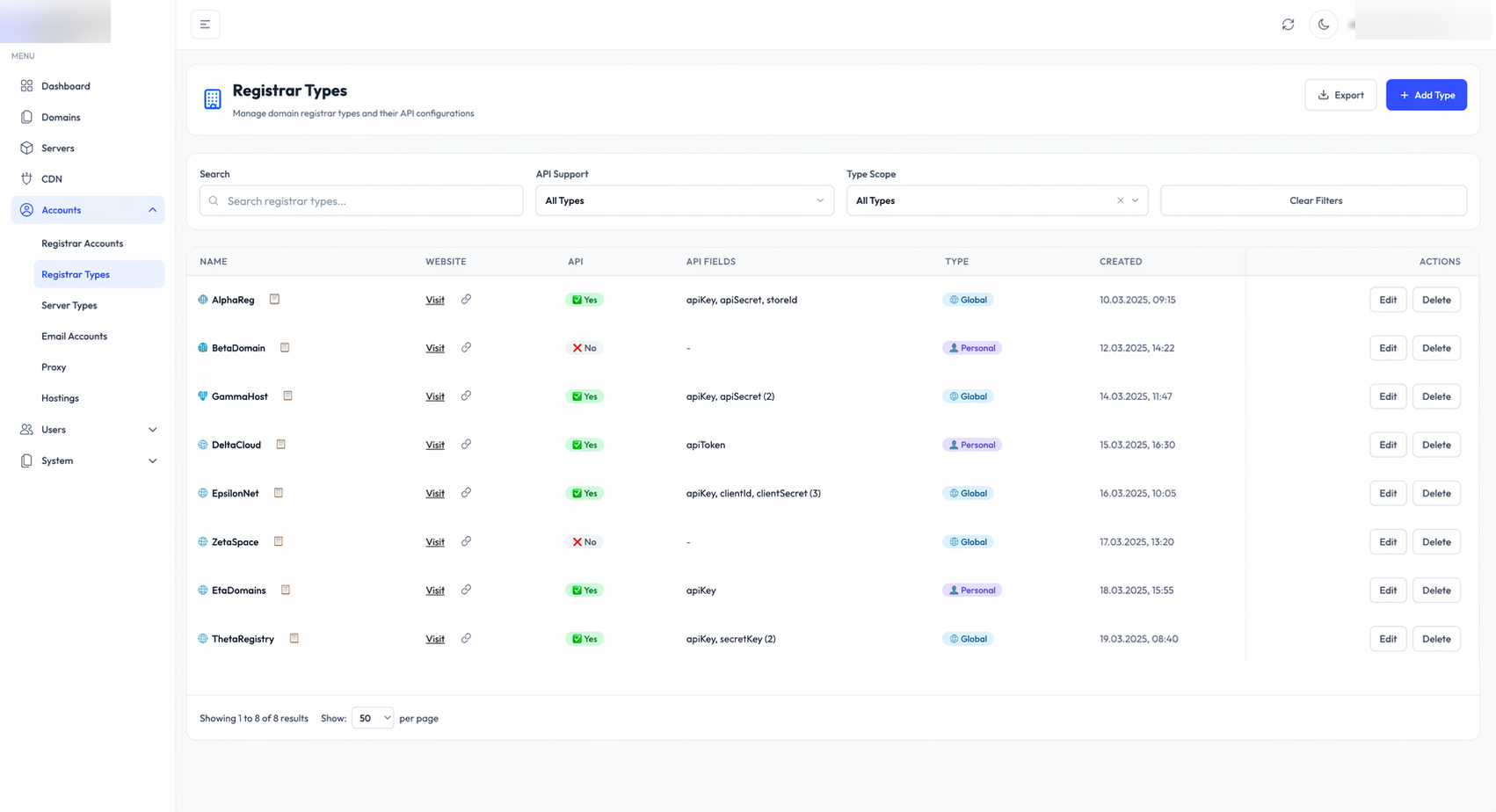
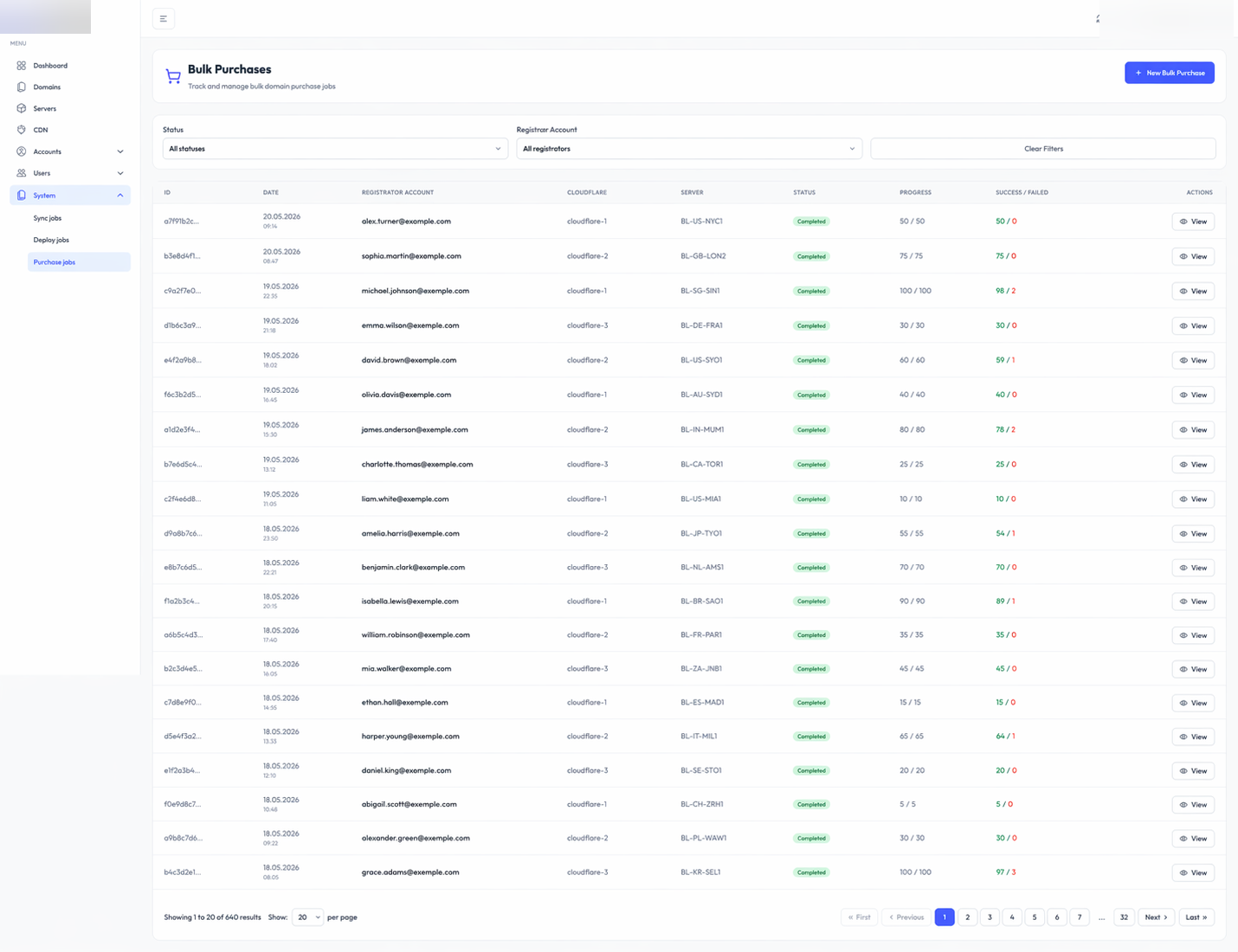
Every registrar account tracked in one place; different per-registrar API schemas abstracted behind one interface for bulk purchase and inventory sync.
Hostings & servers
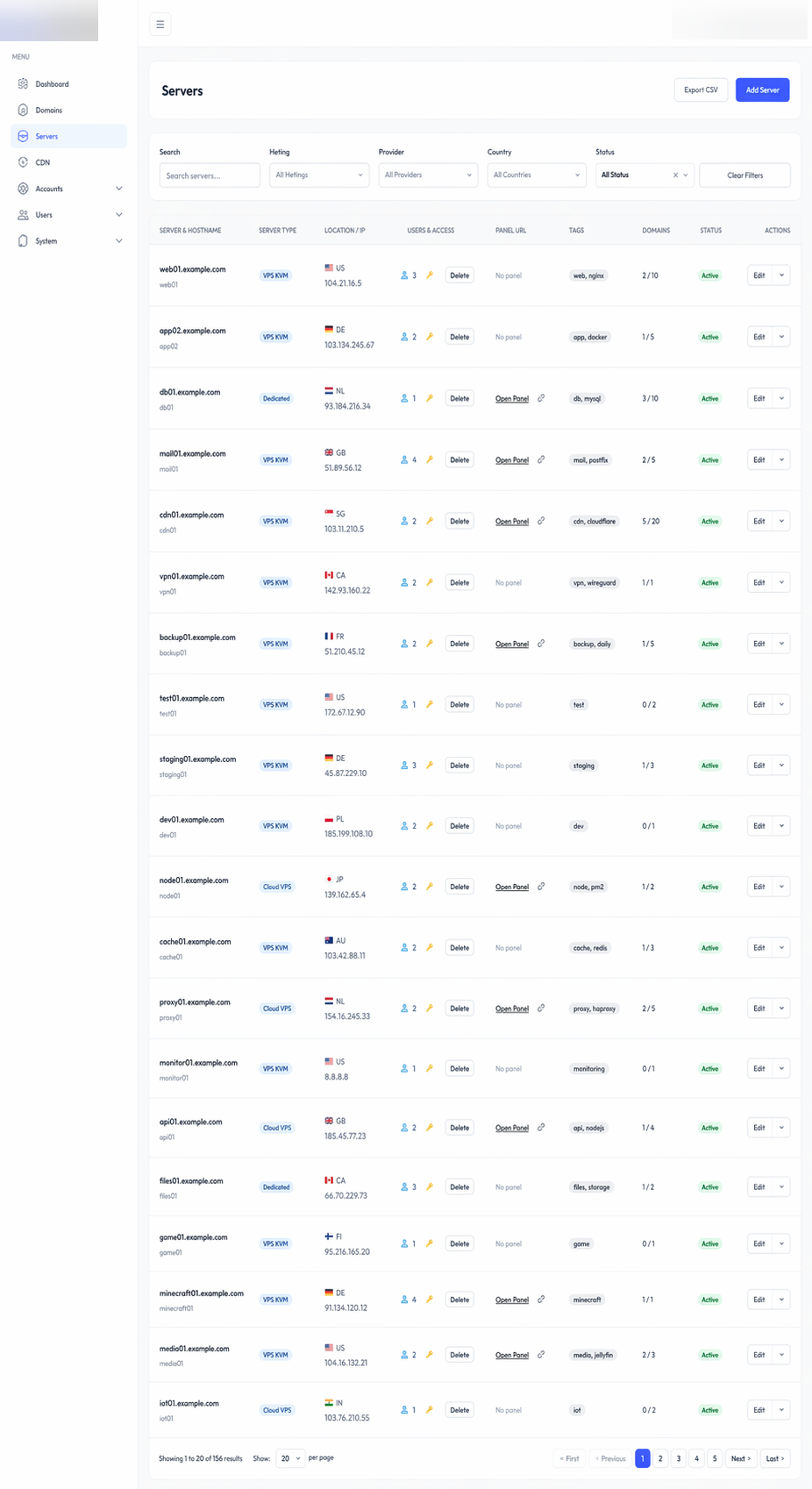
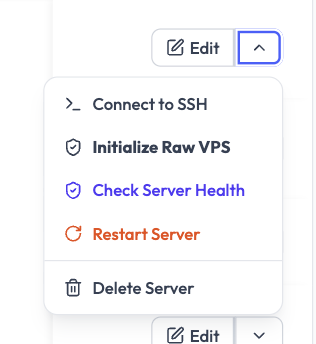
Spin up servers via the hosting API, then provision them by type over SSH: clean Ubuntu with nginx, panel-driven FastPanel, or campaign-aware Keitaro.
CDN providers
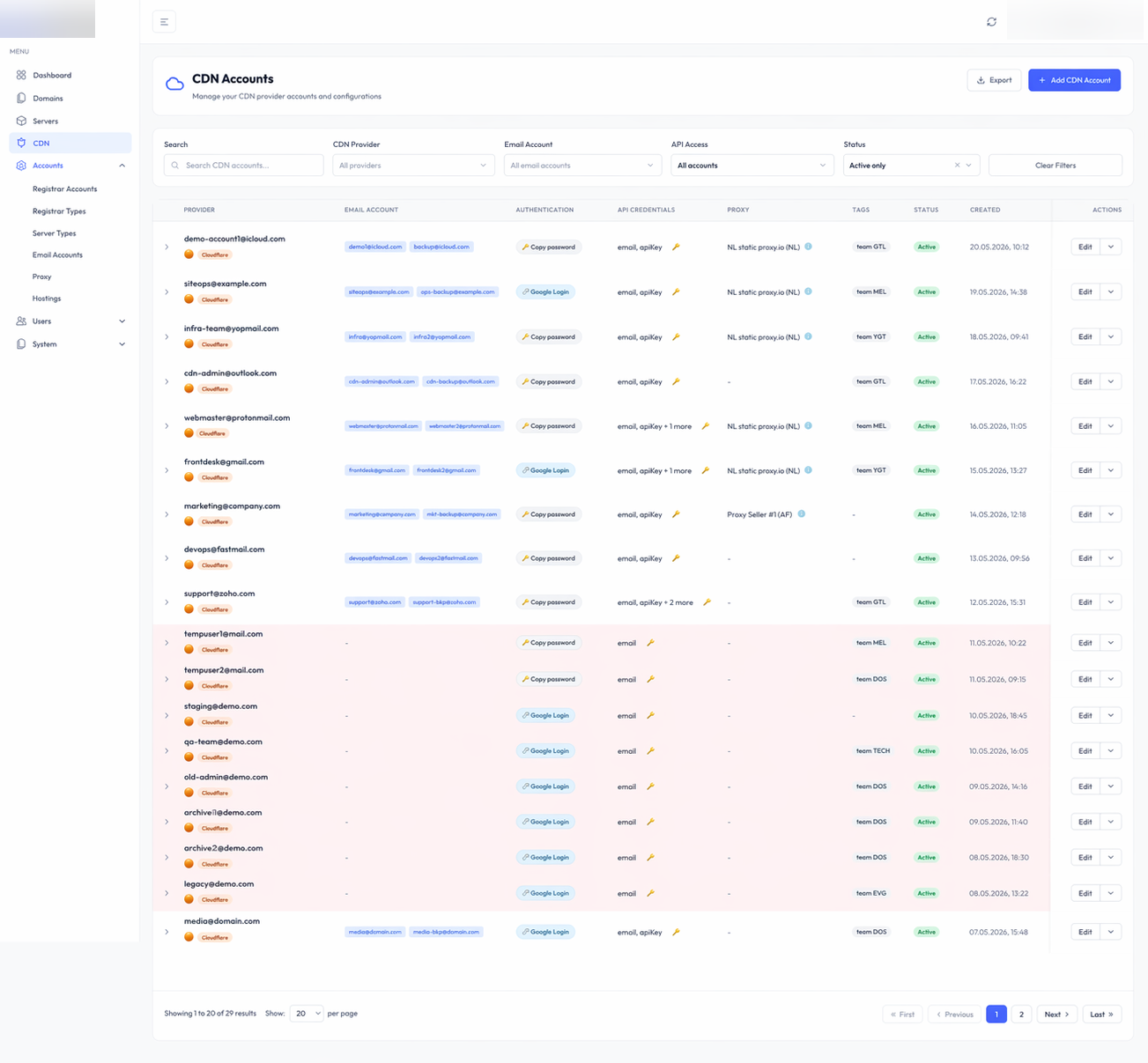
Multi-account CDN management for proxy and protection, tracking which domain is bound to which account and swapping providers without losing the chain.
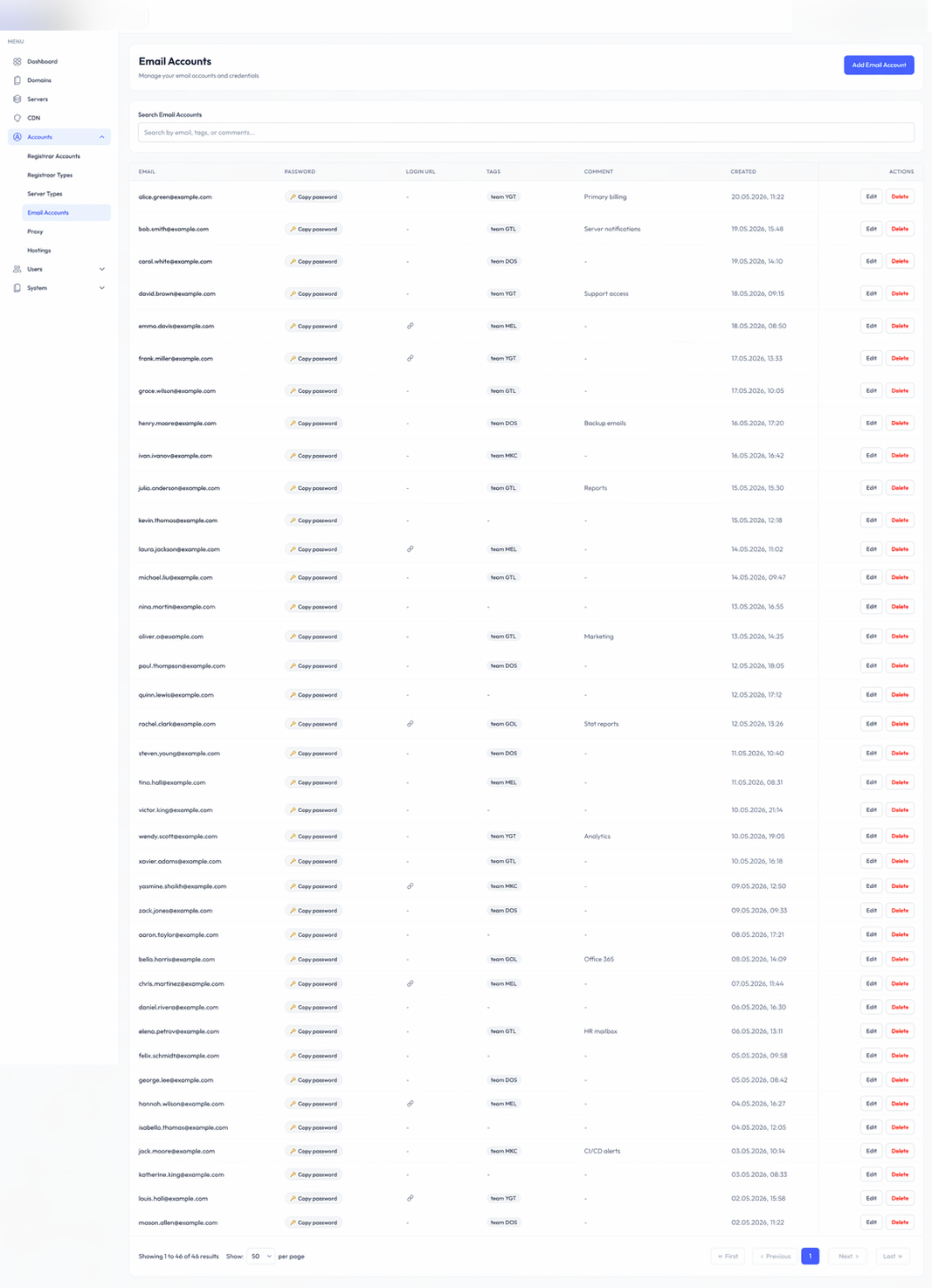
Email directory
A central registry of every email used to register an account. Nothing can be added without its email living here first, so there are no orphaned credentials.
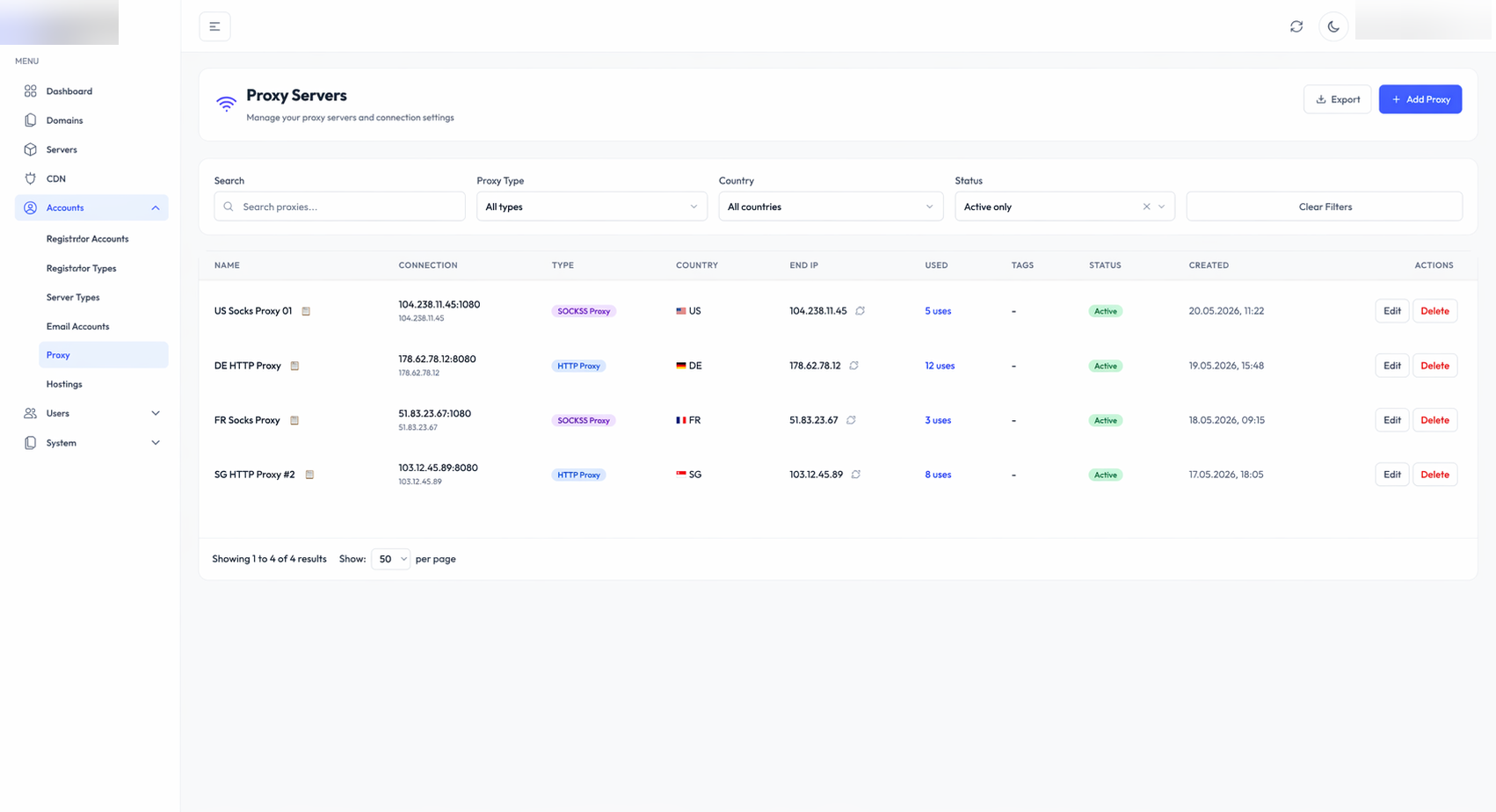
Proxy pool
Proxies attach to any registrar, CDN, or hosting account; all API calls travel through them, protecting the source IP and isolating fault domains.
Sync jobs
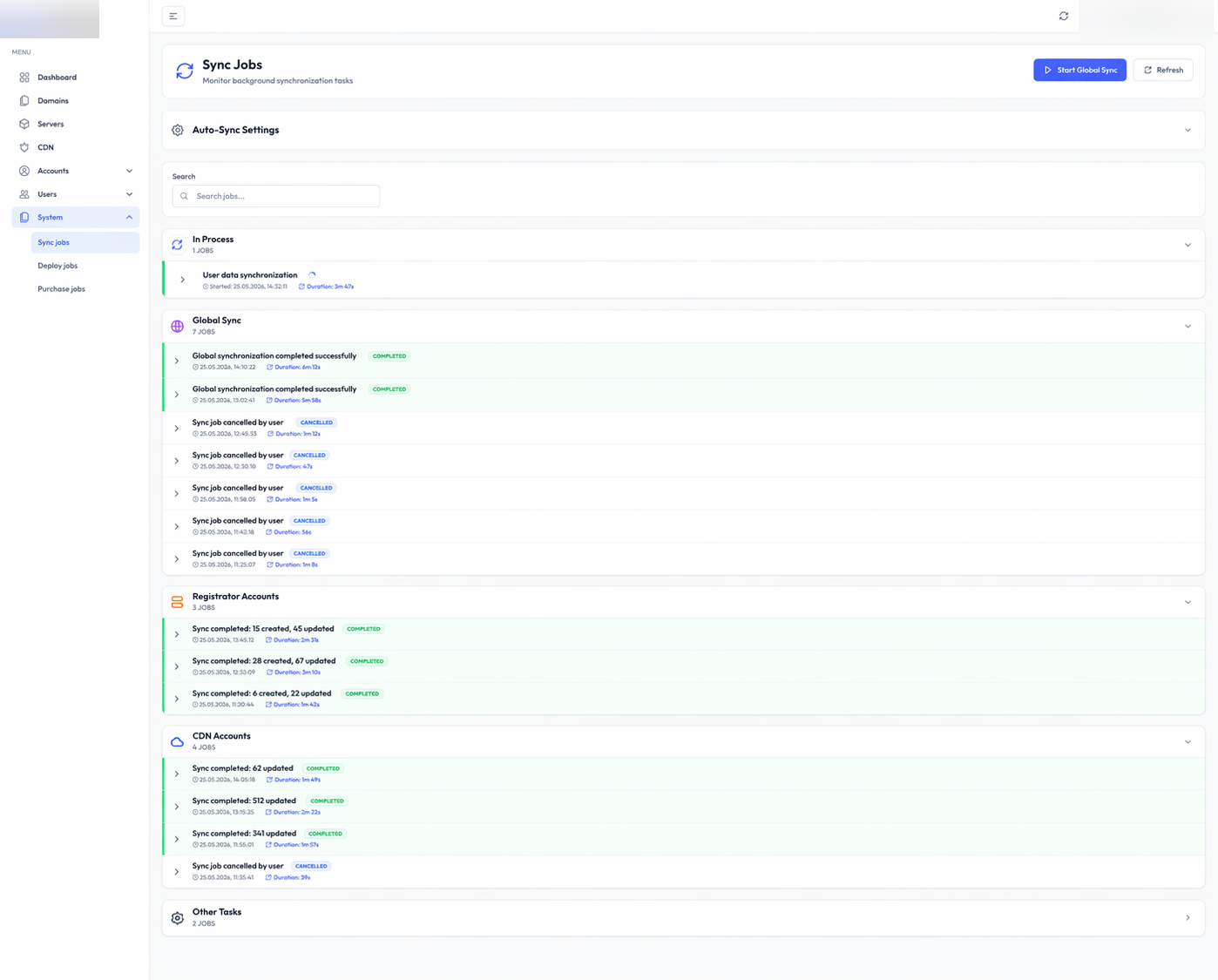
Background workers continuously synchronize every connected account and domain chain, so the dashboard reflects the current state of the connected systems without a manual refresh.
Purchase jobs
Queue mass-domain purchases and watch per-domain status in real time (succeeded, failed, retrying) across hundreds of registrations in parallel.
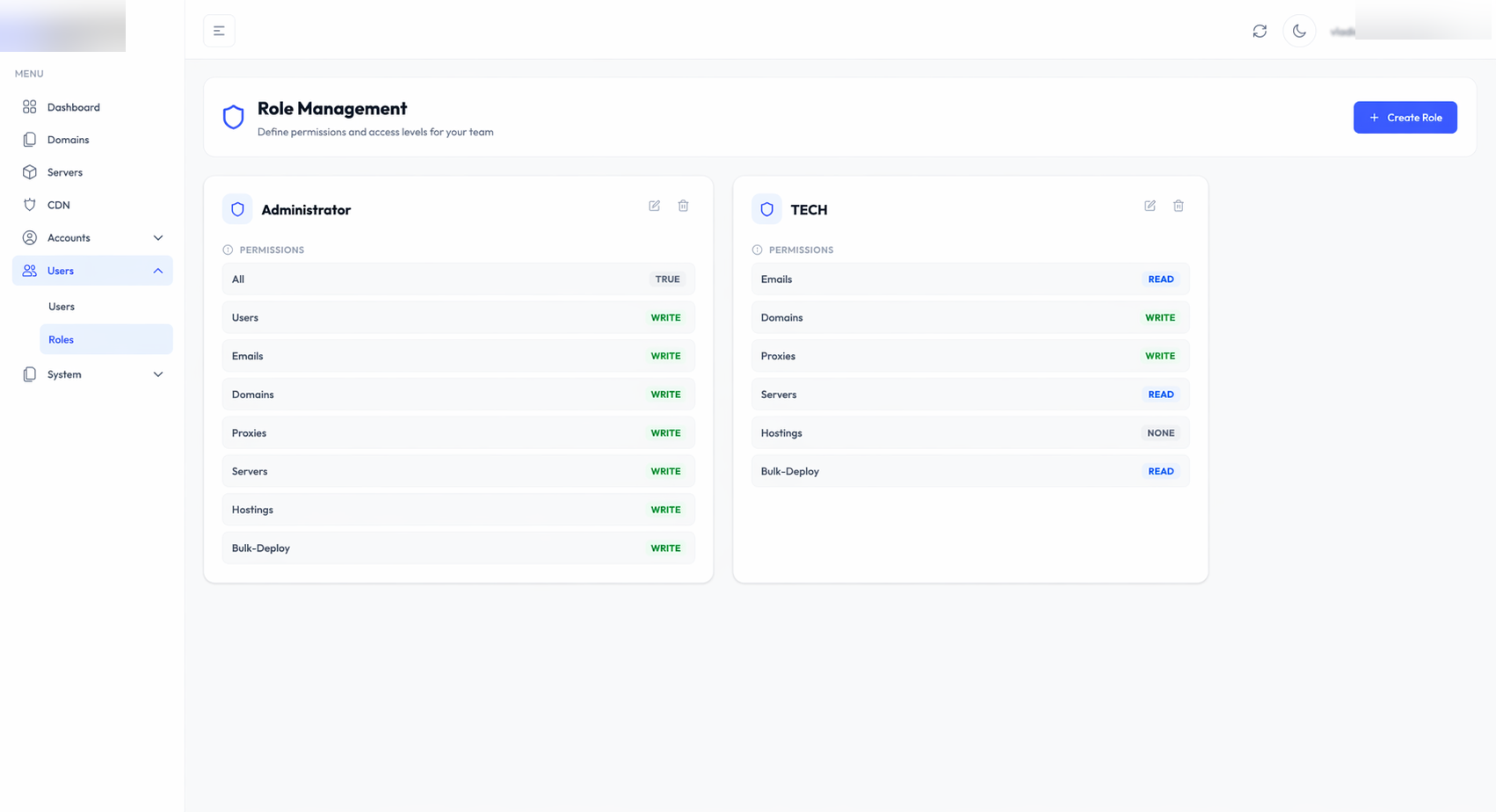
Users & roles
Granular role-based access: give a teammate one registrar, one server type, or one set of domains without exposing the full infrastructure portfolio.
Inside the system
Technical scale
- 9
- System modules
- 3
- Server types
- 100+
- Domains per bulk run
- 1
- Management interface
What it runs on
Server types
RAW VPS with hand-rolled nginx, FastPanel via its panel API, Keitaro with automatic campaign creation
Integrations
Registrar REST APIs behind adapters, multi-account CDN, SSH provisioning, a routed proxy pool
Backend
PostgreSQL as the single source of system state, background sync and purchase workers
A deeper breakdown of the architecture and modules is available on request. There is too much detail for a public page.

What changed
- Ten registrar tabs, five hosting cabinets, and three CDN panels consolidated into one page with full context per domain.
- Bulk domain purchases run in parallel with per-domain status, instead of one at a time.
- Clone, migrate, attach a CDN, swap DNS, or deploy a ZIP, without SSH sessions or copy-pasted configs.
- Teammates get scoped access to part of the portfolio without visibility into the rest.
- Background synchronization keeps the dashboard aligned with the connected systems, with no manual refresh.